
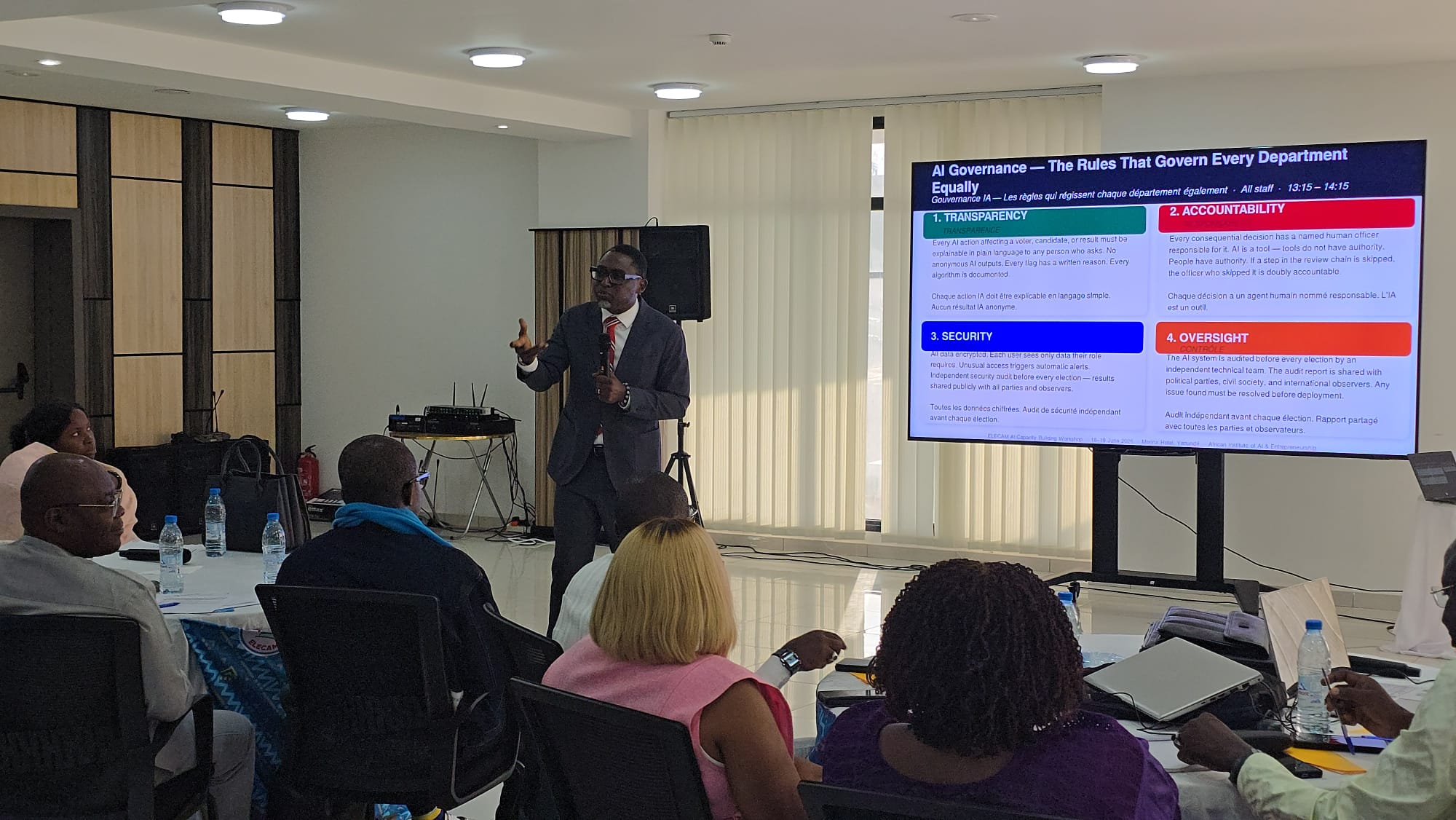
AI Policy & Governance


This is the practice that makes institutional AI use defensible. It is grounded in our Chairman’s published work, AI Policy for Companies, Governments and NGOs, and it runs through every programme we teach rather than sitting as an optional module.
Who this is for
Boards and audit committees; regulators and supervisory bodies; data protection and compliance officers; ministries drafting sectoral or national guidance; any institution whose staff already use AI without a written rule covering it.
What is covered
Institutional AI policy
Drafting acceptable-use rules, approval lines, data-handling standards and record-keeping requirements, written for the institution’s own mandate and in language its staff will actually follow.
Risk & impact assessment
Structured AI risk registers, control design and residual-risk reporting, so a board can see what has been accepted rather than only what has been mitigated.
Board & regulator engagement
Governance briefings for the people who carry the accountability: what they are signing, who is liable, and what questions to ask of any AI proposal put in front of them.
Policy research & publication
Applied research and publication on AI governance in African institutions, including the Chairman’s published text and the institute’s own position papers.
How it runs
Policy work is deliberately separated from our build work. An institution can commission a policy from us without commissioning a system, and we will not recommend our own products inside a governance assignment. That separation is what gives the findings weight with a regulator.
What you receive
- 01A drafted institutional AI policy, ready for board adoption
- 02An AI risk register with controls and residual risk stated
- 03A governance briefing delivered to the board or executive
- 04Record-keeping templates for AI-assisted decisions